
Wofür investieren wir in Sustamatic?
Sie investieren in weniger Handarbeit. Belege werden automatisch verarbeitet, Prüfungen bleiben nachvollziehbar. So kann Ihr Team die Daten bei jeder Kundenanfrage und in jedem Berichtszeitraum wieder nutzen.
Beantworten Sie Kundenfragen zu Ihren Emissionen mit Zahlen, die Sie erklären können. Sustamatic macht aus Ihren Rechnungen und Belegen nachvollziehbare CO₂-Daten. Ihr Team gewinnt Zeit für das Tagesgeschäft.
sustainability
systematic
automatic
SUSTAMATIC
Jetzt kostenlos ausprobierenMüller Holzgroßhandel GmbH hat Sustamatic von Anfang an mitentwickelt. Die Plattform entstand aus echtem Holzhandelsalltag, nicht vom Reißbrett.

Warum jetzt
Ein Kunde fragt nach Emissionsdaten. Ein Geschäftspartner möchte Ihren Fußabdruck verstehen. Eine klare Datenbasis hilft Ihrem Team, mit Belegen zu antworten, und gibt Ihnen eine Grundlage für eigene Klimaentscheidungen.
Das eigentliche Problem
Ein Kunde braucht Emissionsdaten. Die Rechnungen liegen in der Buchhaltung, Energiebelege im Postfach, Transportdaten bei den Kollegen. Ihr Team sammelt, ordnet zu und rechnet. Bei der nächsten Anfrage beginnt vieles von vorn.
Ihr neuer Alltag
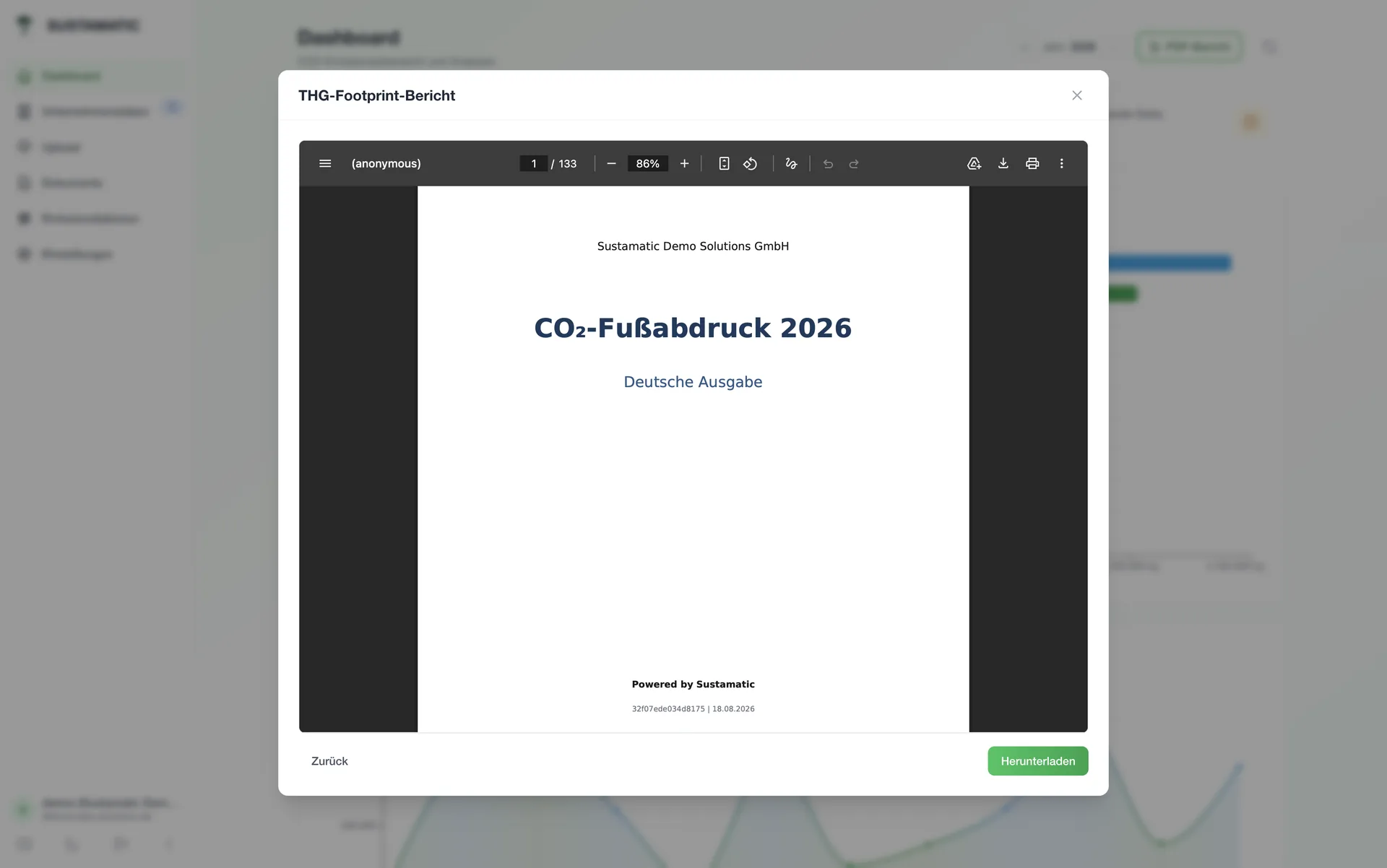
Eine Anfrage landet im Postfach. Sie öffnen Ihre Emissionsübersicht, stellen den passenden Bericht zusammen und zeigen bei Rückfragen die Belege hinter den Zahlen. Ihr Team hat eine Grundlage, auf der es weiterarbeiten kann.
Zeigen Sie Ihren Kunden, woher Ihre Emissionszahlen stammen.
Automatisieren Sie wiederkehrende Erfassungs- und Zuordnungsarbeit.
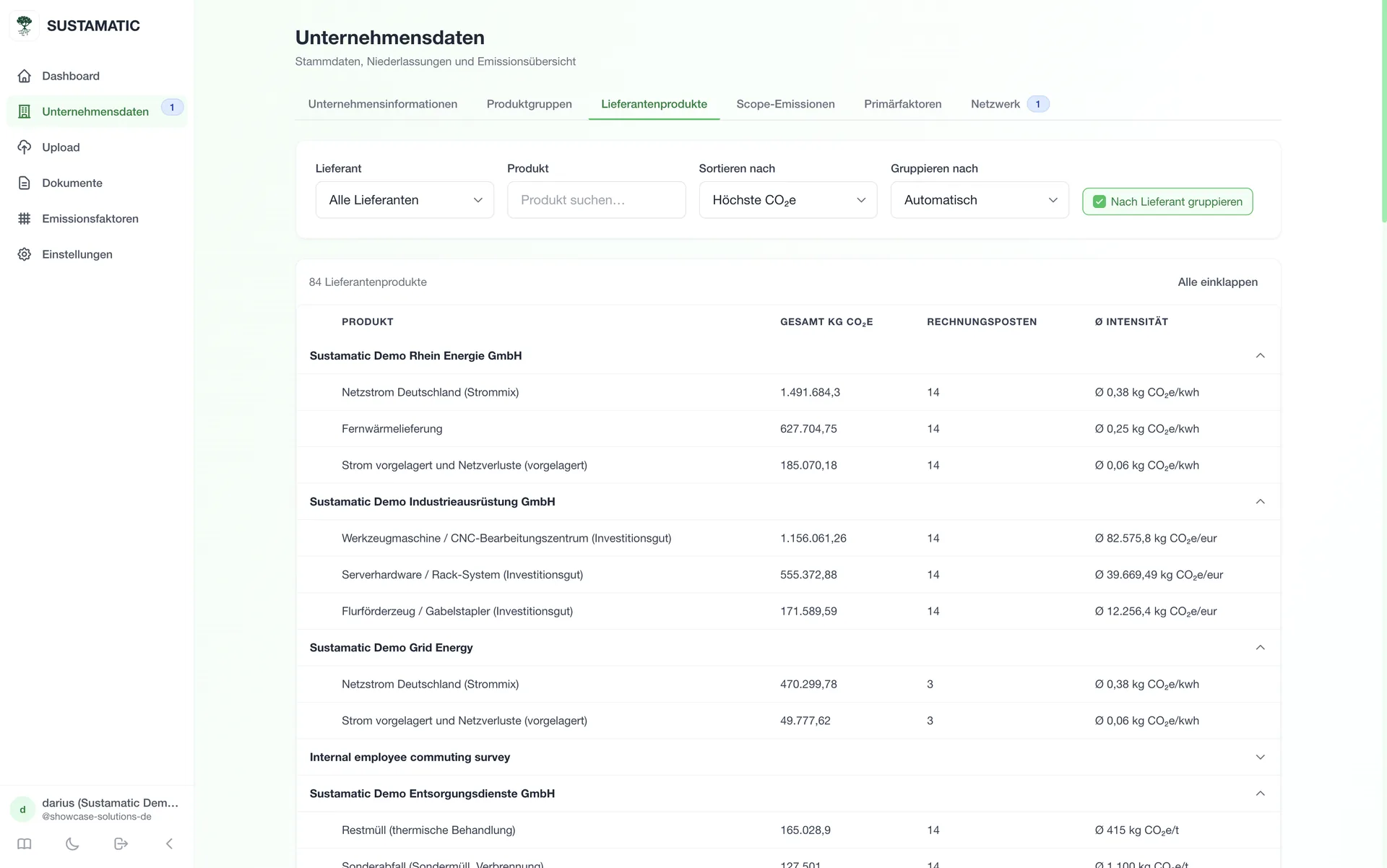
Erkennen Sie, welche Lieferanten und Aktivitäten Ihren Fußabdruck besonders prägen.
So funktioniert es
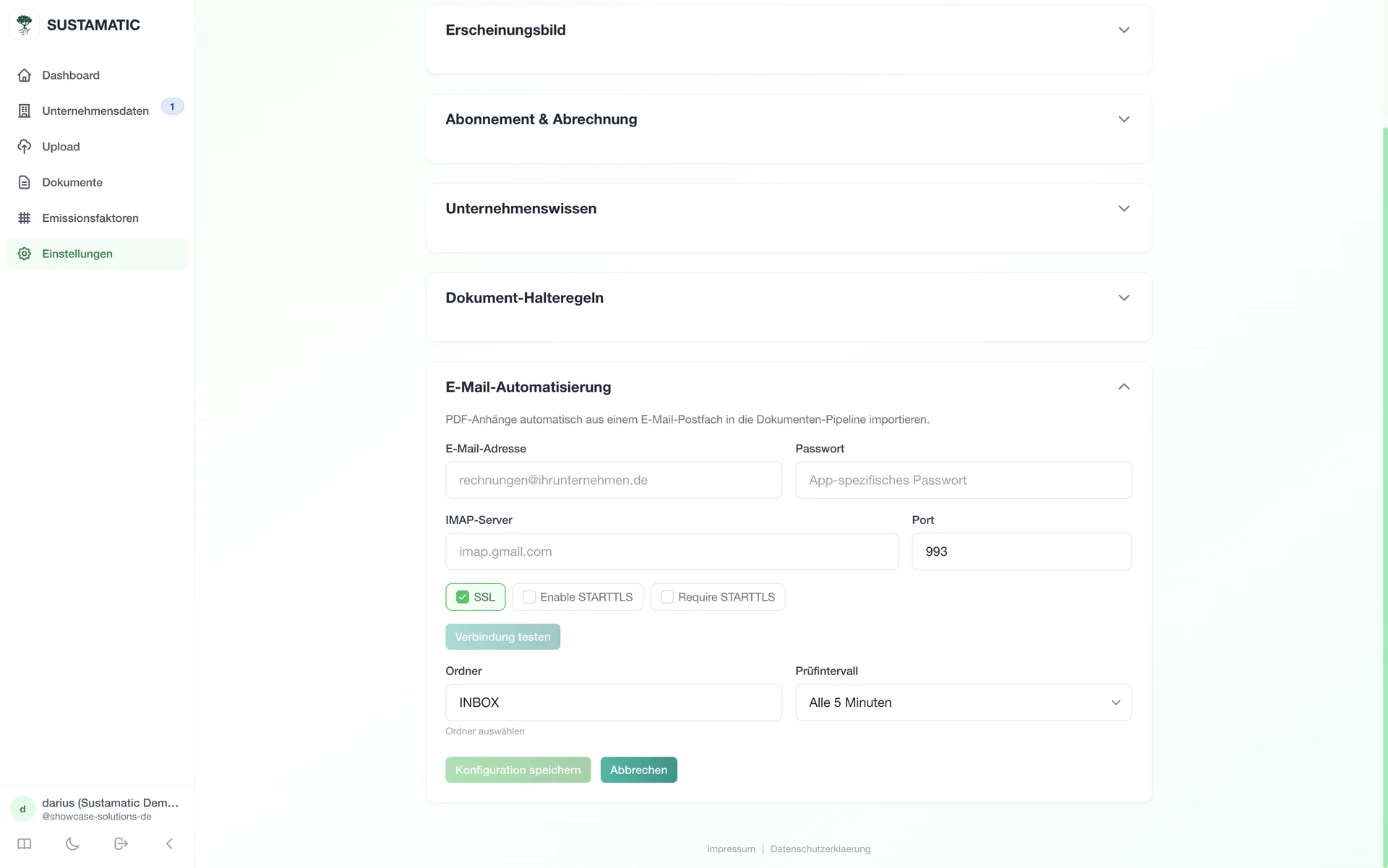
Sustamatic automatisiert den Weg vom Beleg zur Emissionszahl. Ihr Team prüft markierte Zuordnungen und behält die Kontrolle über das Ergebnis.
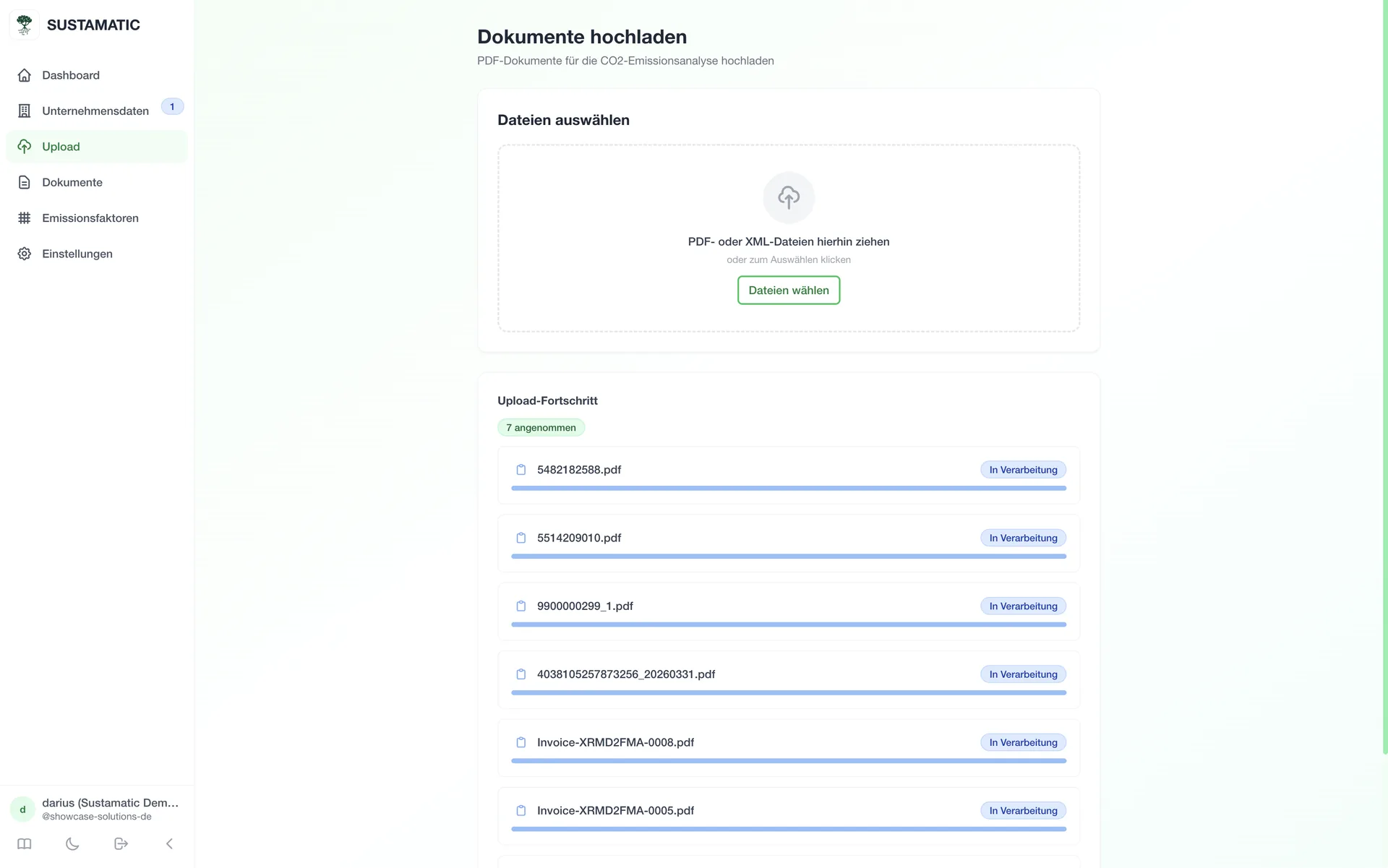
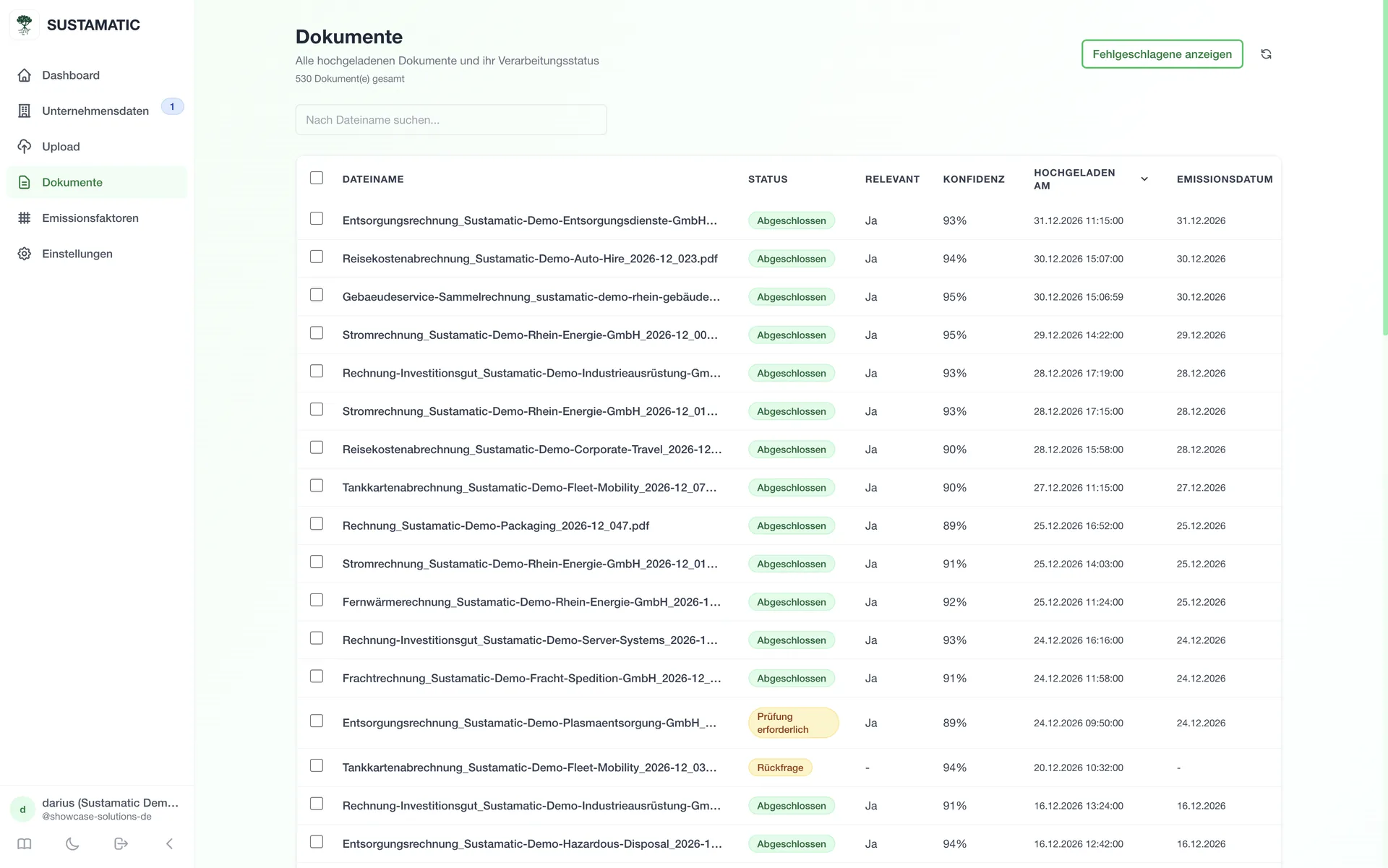
Laden Sie Rechnungen und weitere Dokumente hoch oder verbinden Sie ein E-Mail-Postfach.
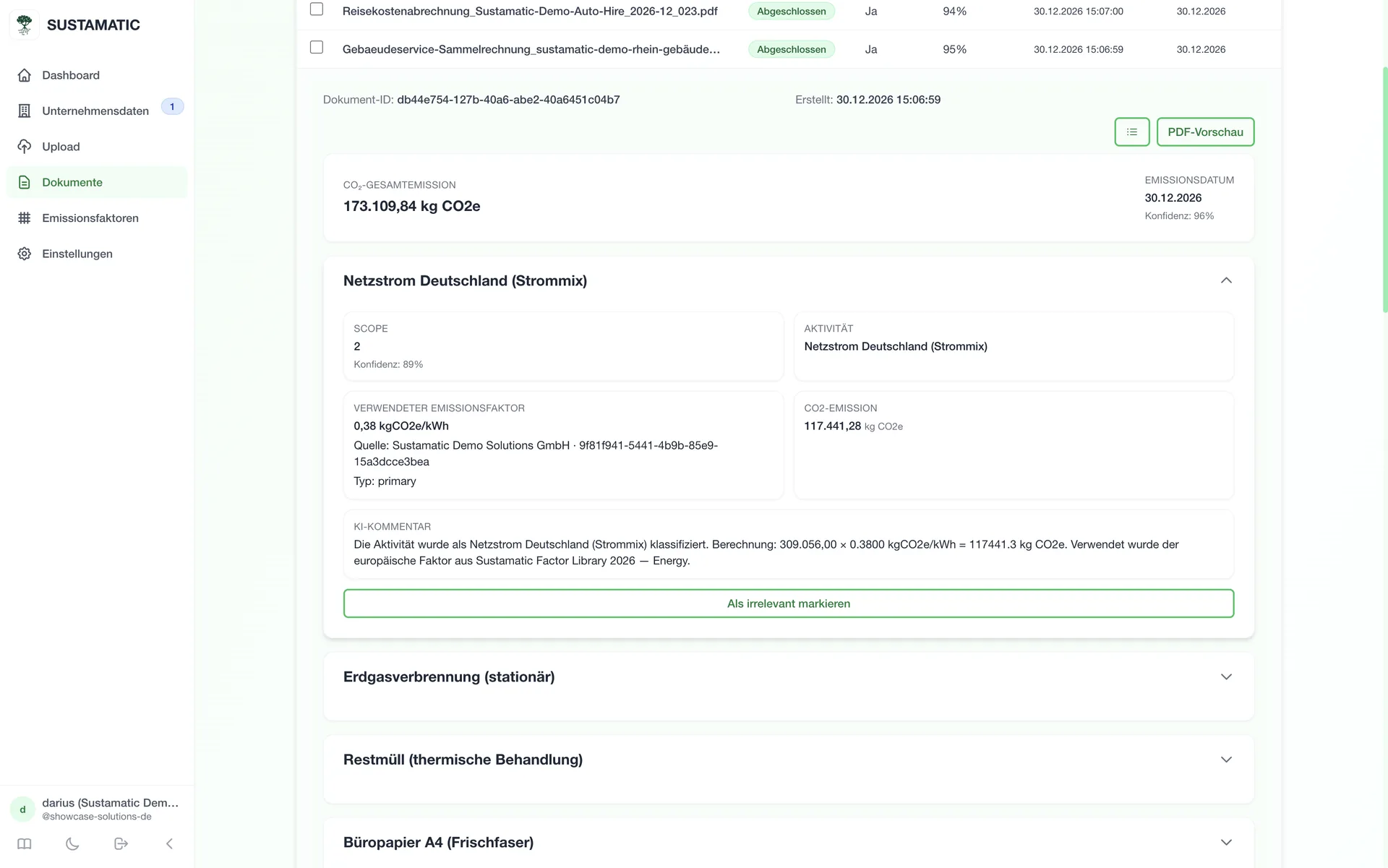
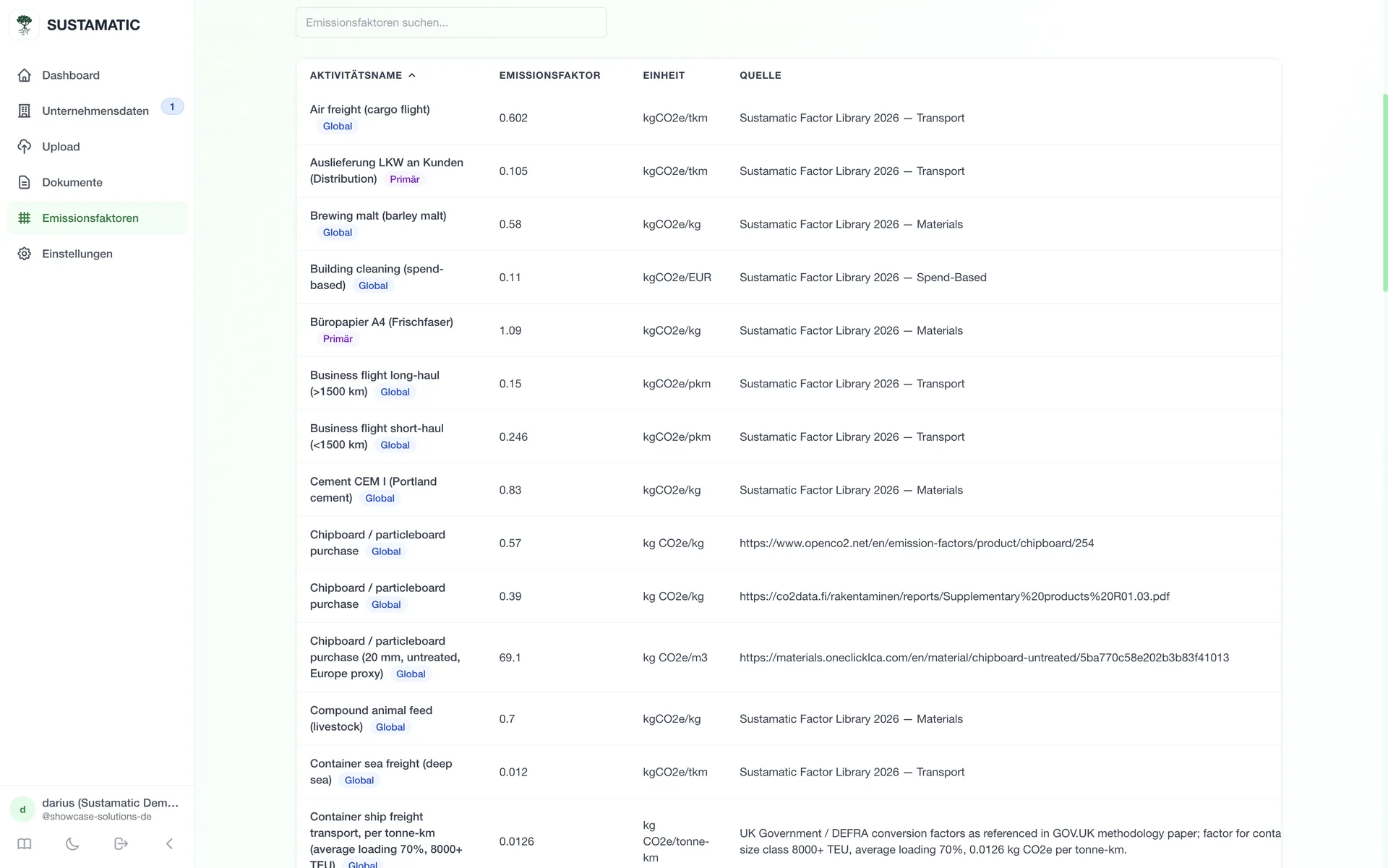
Sustamatic liest die Inhalte aus, ordnet Aktivitäten und Emissionsfaktoren zu und berechnet CO₂e.
Prüfen Sie markierte Zuordnungen und erstellen Sie Ihren Bericht. Sie behalten die Kontrolle über das Ergebnis.
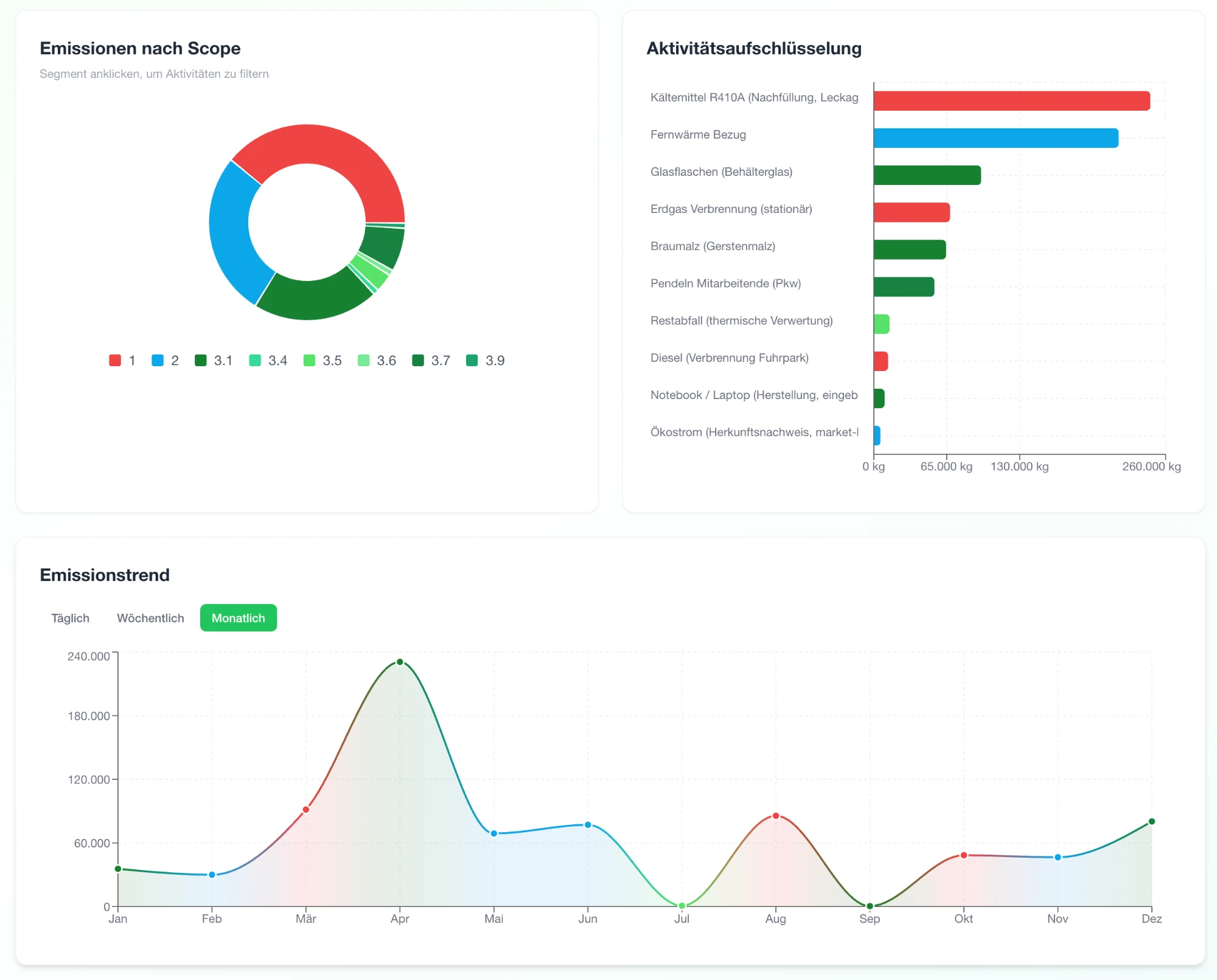
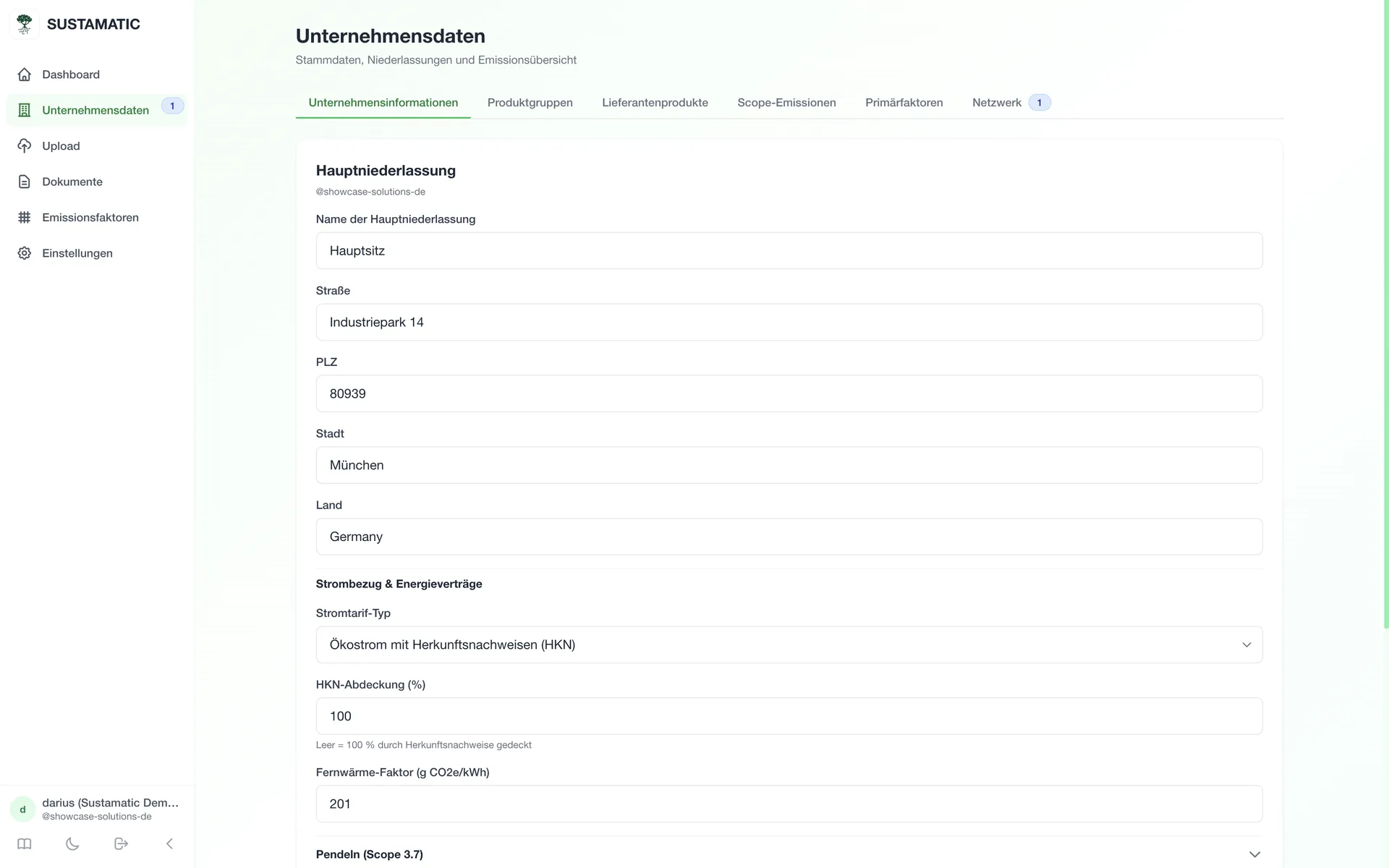
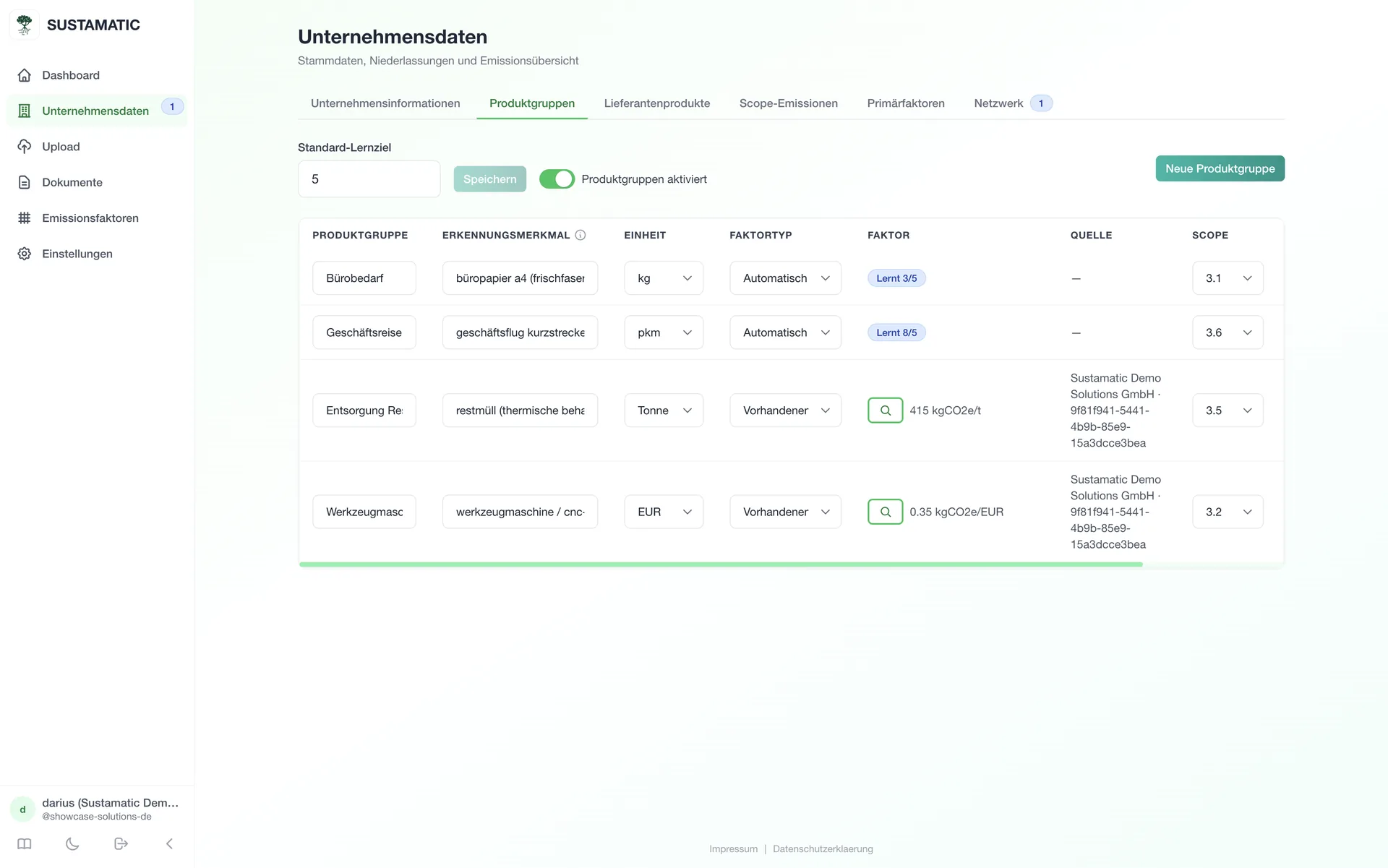
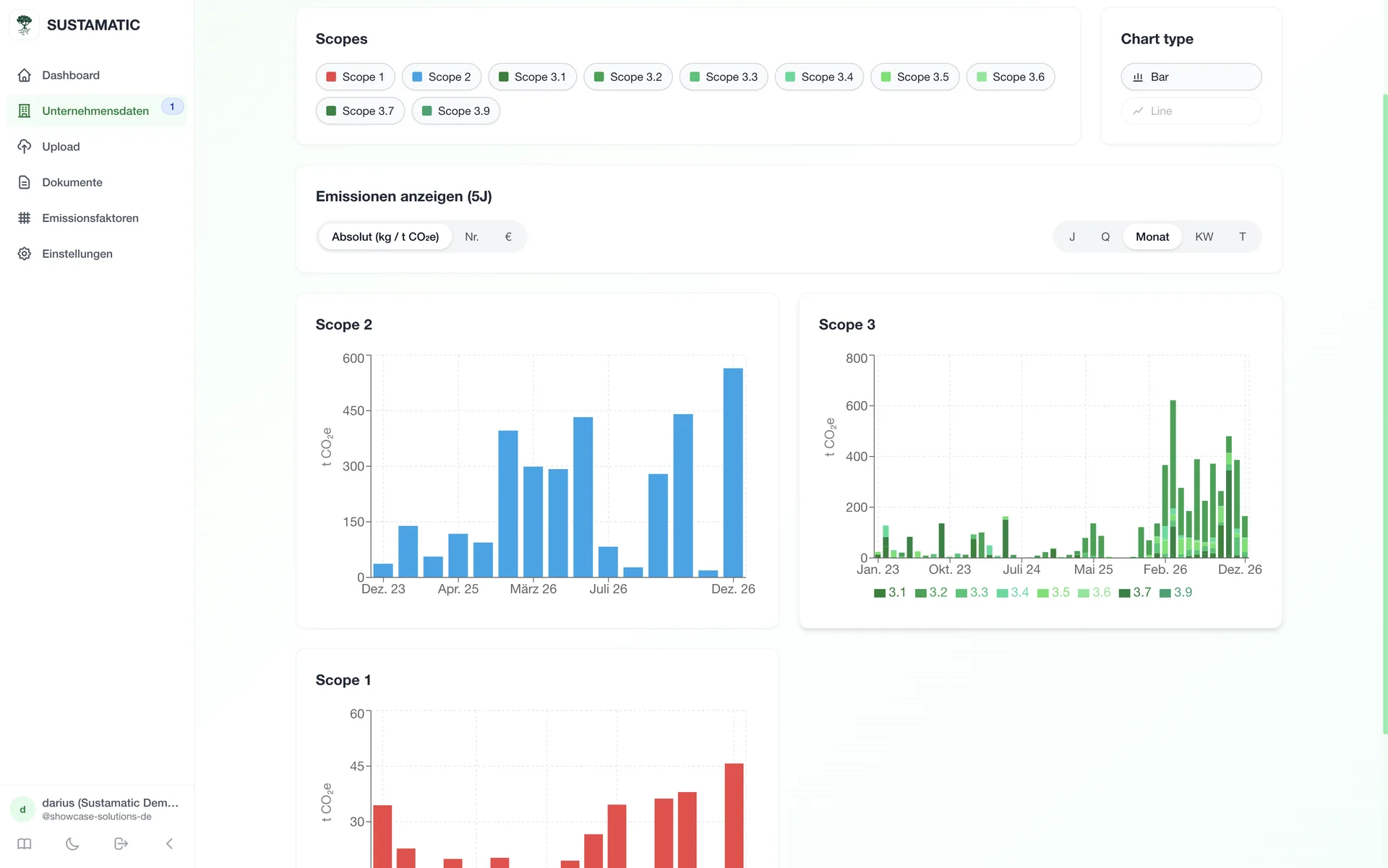
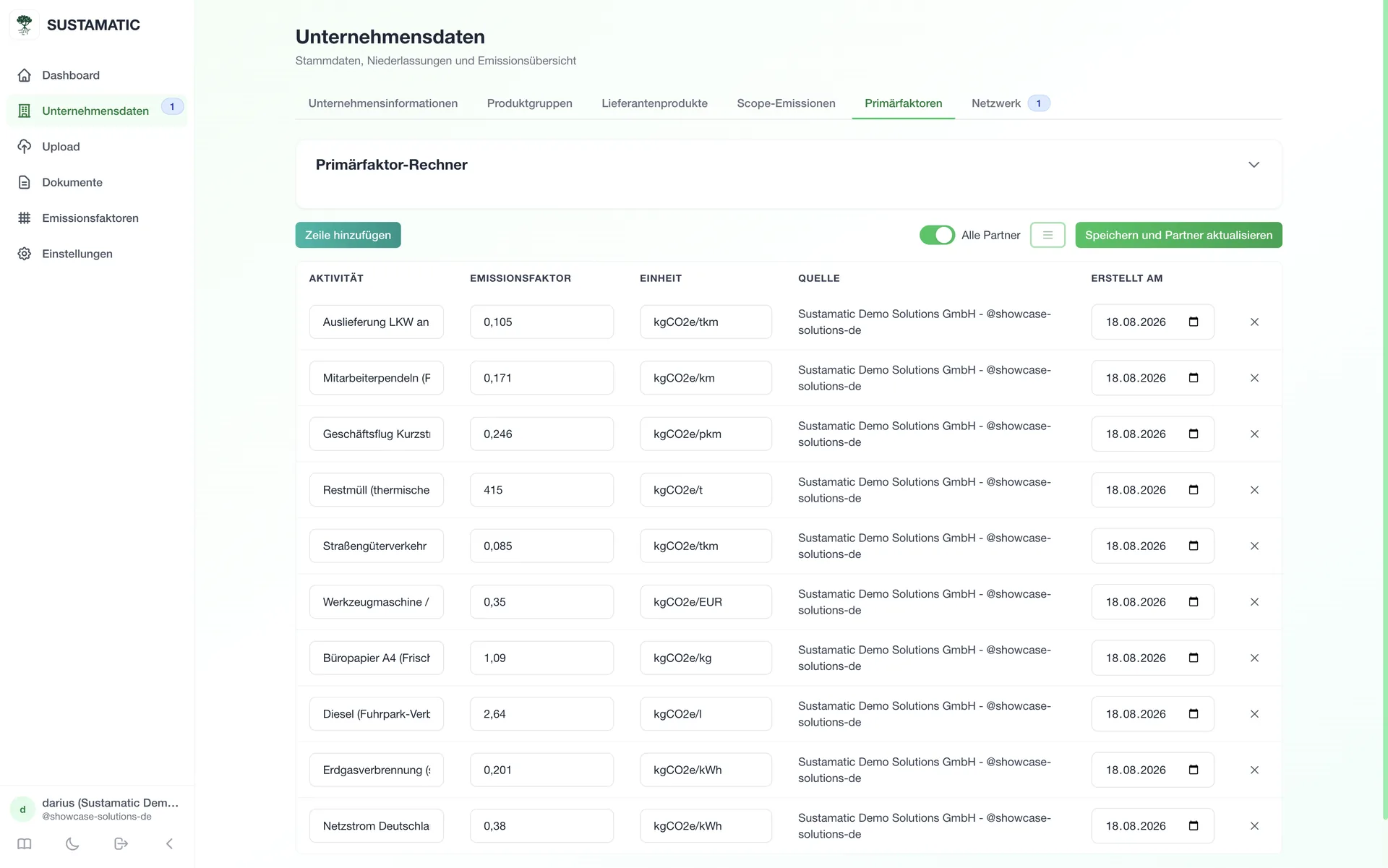
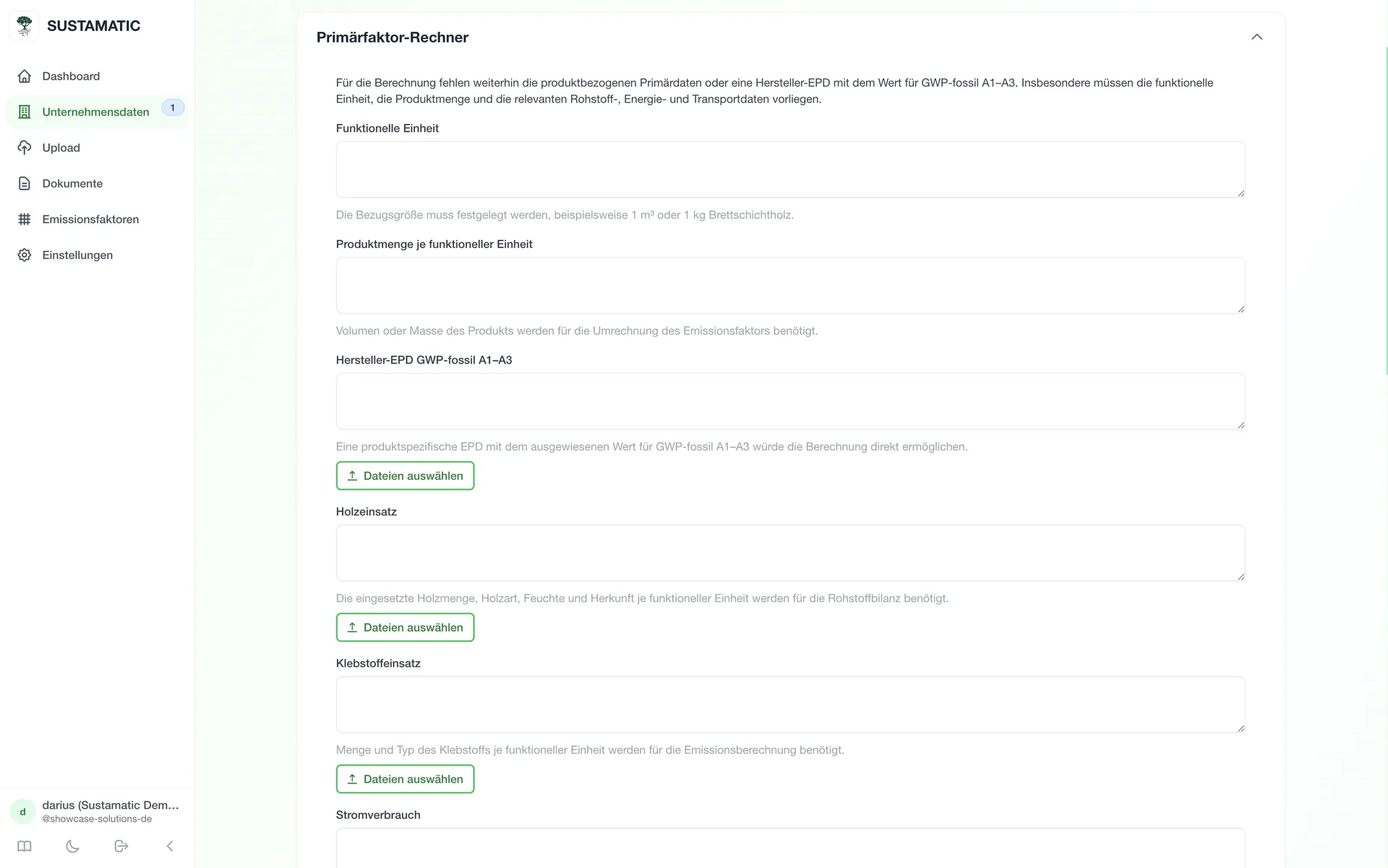
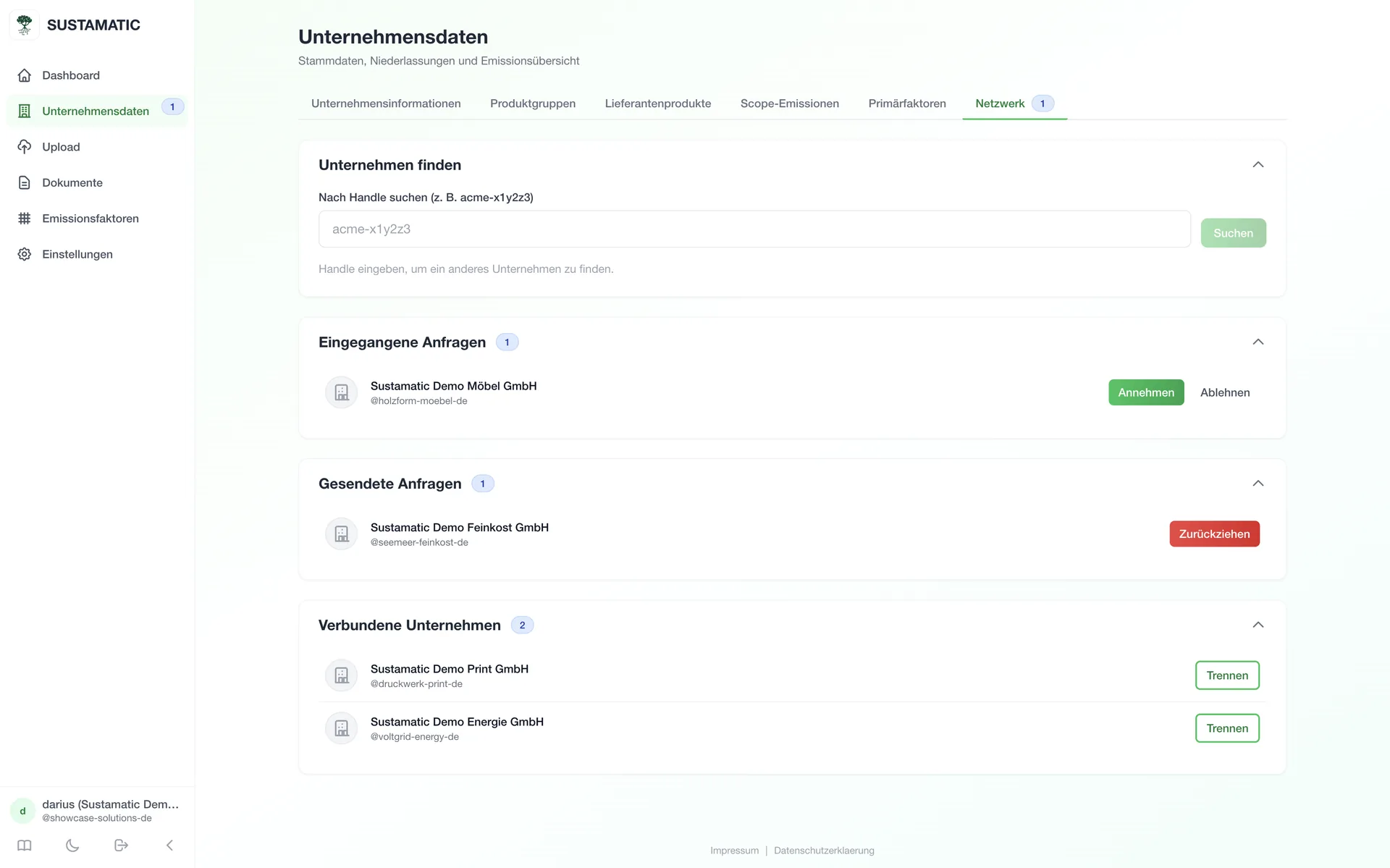
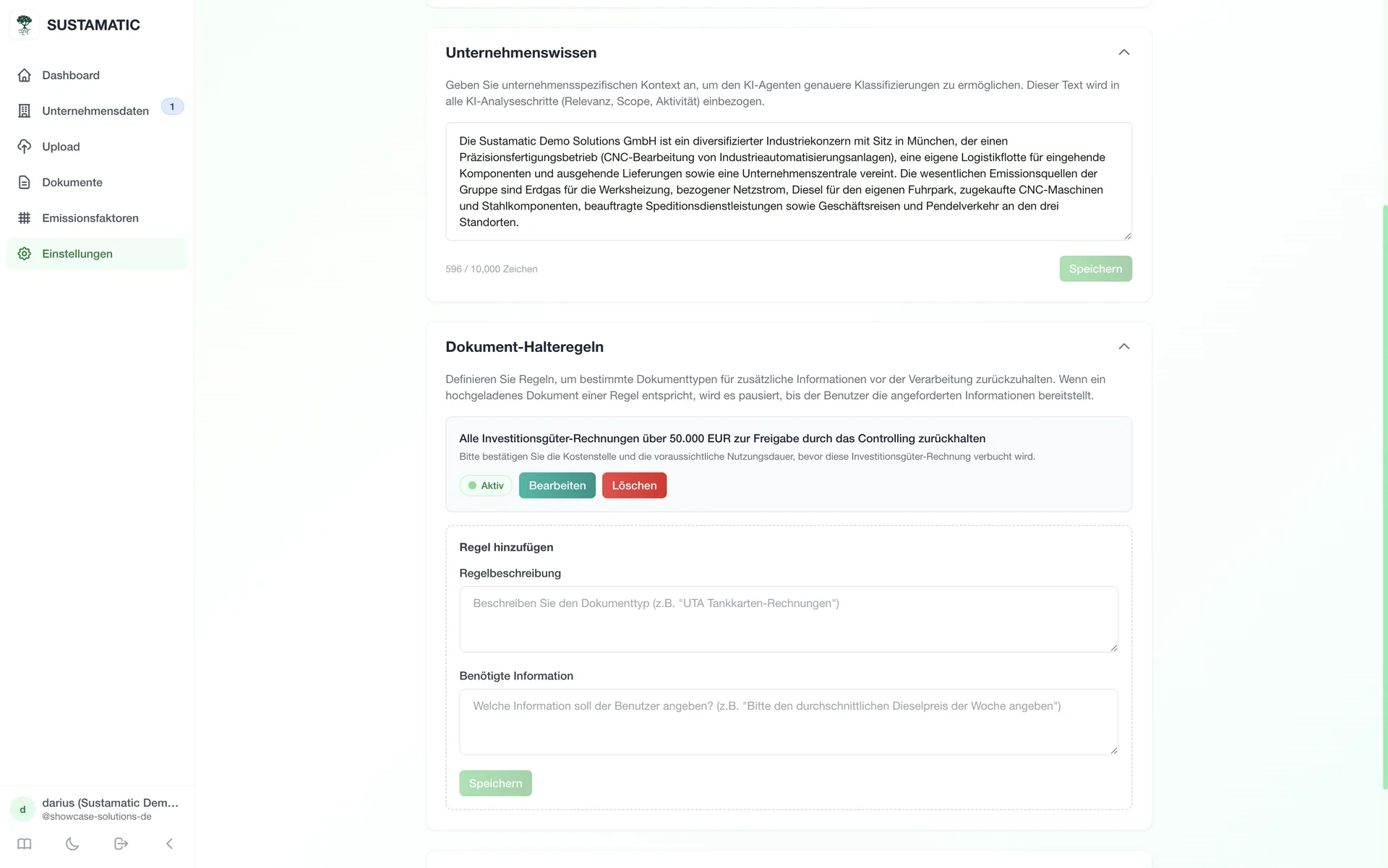
Der gesamte Fußabdruck auf einen Blick
Angezeigte Firmennamen sind fiktiv.
Ansicht 1 von 16: Der gesamte Fußabdruck auf einen Blick
Warum man dem Prozess trauen kann
Sustamatic dokumentiert den Weg vom Beleg zur Emissionszahl. Quellen, Faktorwahl und Verarbeitungsschritte bleiben nachvollziehbar. So können Sie Rückfragen beantworten und gezielt prüfen, wo Daten ergänzt oder Zuordnungen korrigiert werden müssen.
Einwände
Sie investieren in weniger Handarbeit. Belege werden automatisch verarbeitet, Prüfungen bleiben nachvollziehbar. So kann Ihr Team die Daten bei jeder Kundenanfrage und in jedem Berichtszeitraum wieder nutzen.
Das ist der normale Ausgangspunkt. Der Prozess beginnt mit den Unterlagen, die Sie schon haben, nicht mit einem perfekten Datenmodell.
Jeder Schritt vom Dokumenteneingang bis zur finalen Zahl bleibt sichtbar. Ihr Team kann das Ergebnis erklären, statt einer Blackbox vertrauen zu müssen.
Genau das ist der Punkt: Mit Sustamatic brauchen Sie kein großes Sustainability-Team. Ihre Mitarbeitenden können sich in Ruhe auf andere Aufgaben konzentrieren. Sustamatic übernimmt die Belegverarbeitung im Hintergrund.
MCP · KI-Agenten
40+ Werkzeuge · 8 Gruppen
Sustamatic betreibt einen nativen MCP-Server. Claude, ChatGPT, Microsoft Copilot oder ein eigener Agent liest und pflegt deine CO₂-Daten direkt. Ohne Export, ohne API-Key, ohne Copy-Paste. Eine Adresse, einmal im Browser bestätigt.
Die Weboberfläche kennt nur hochgeladene Daten. Dein Agent kennt zusätzlich eure Preislisten, ERP-Daten und Budget. Zusammen ergeben sich Antworten, die keine der beiden Seiten allein geben kann.
Du bestätigst die Verbindung einmal im Browser und siehst, welche Anwendung fragt. Keine Schlüssel, keine Konfiguration, kein Warten auf die IT. Dein Agent kann sofort loslegen.
Was hat Scope 3 im letzten Quartal getrieben? Welcher Lieferant hat die höchste Intensität pro Rechnung? Dein Agent antwortet aus den Live-Daten, mit Beleg, direkt im KI-Tool, das dein Team ohnehin nutzt.
Jedes Unternehmen kann zu einer nachhaltigeren Zukunft beitragen, wenn es weiß, wo es wirklich steht. Sustamatic verwandelt alltägliche Rechnungen in genaue, belastbare Emissionsdaten, aus denen echte Entscheidungen entstehen.
Nächster Schritt
Testen Sie Sustamatic mit Ihren eigenen Dokumenten. Sehen Sie, welche Arbeit die Plattform übernimmt und wie daraus eine Datenbasis für Ihre nächsten Kundenfragen entsteht.